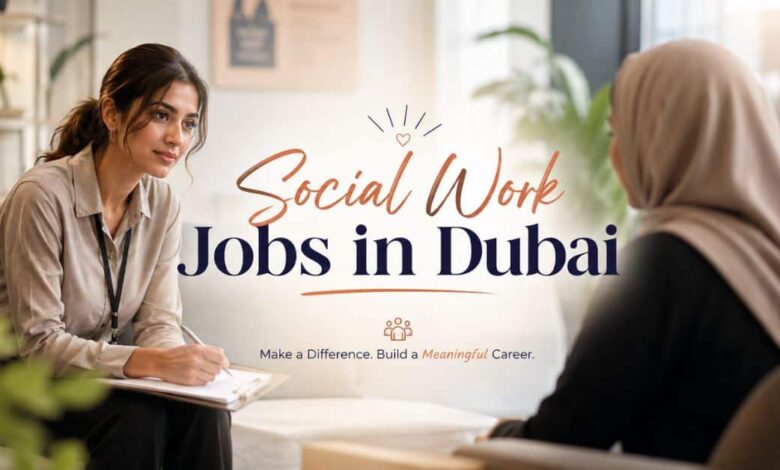
There’s something deeply human about this profession in Dubai right now. Behind every case file is a real story: families adjusting to a new country, children finding their place in international schools, patients needing emotional support in hospital rooms, and communities learning to navigate change together. Social work here isn’t just a job; it’s a steady, meaningful presence in moments that matter most.
Overview:
Dubai’s population has crossed 3.8 million, spanning over 200 nationalities, and the emirate continues to invest heavily in social welfare frameworks, mental health programmes, and family support services. Government-led initiatives under the Dubai Social Agenda 33 have accelerated hiring across public bodies, hospitals, and licensed NGOs.
The demand is particularly strong for professionals who can navigate multicultural environments, hold recognised clinical certifications, and work within the UAE’s regulatory licensing framework. Professionals from the Philippines, India, the UK, Australia, Canada, and across the Arab world have successfully built careers here, many with full visa sponsorship from day one.
Check Also: Visa Sponsor Caregiver Jobs in Dubai
Salaries for Social Workers in Dubai:
Social work salaries in Dubai vary significantly by sector, experience level, and specialisation. A key advantage of working in the UAE is that all salaries are tax-free, which considerably increases take-home pay compared to equivalent roles in Europe or North America.
Entry Level
AED 6,967 per month · 1–3 yrs exp
Mid Level
AED 8,800 per month · 3–6 yrs exp
Senior Level
AED 14,900 per month · 8+ yrs exp
Specialist Roles
AED 25,000 per month · clinical/DHA licensed
The average gross salary for a social worker in Dubai sits at approximately AED 154,683 per year, according to salary benchmarking data. Senior practitioners, particularly those holding DHA or HAAD licences and specialising in clinical, palliative, or mental health social work, command packages toward the upper range.
Beyond base salary, many employers in Dubai supplement packages with housing allowances, annual flights home, private medical insurance, and end-of-service gratuity payments.
Types of Social Work Jobs in Dubai:
Social work in Dubai is far from a single career track. The roles available span several distinct sectors, each with its own environment, responsibilities, and salary bands.
- Clinical social workers are employed primarily in hospitals and healthcare settings places like Mediclinic, American Hospital Dubai, and NMC Health. These roles focus on psychosocial support for patients and families, discharge planning, and multidisciplinary coordination. A DHA licence is typically required.
- School social workers are placed in international schools, academies, and educational institutions. Organisations such as Aldar Academies and Bukhatir Education Management regularly recruit for AY 2026–2027 positions. These roles address academic, emotional, and behavioural challenges among students from diverse backgrounds.
- Community and NGO social workers operate through charities, family services organisations, and government-affiliated community development bodies. Roles here often emphasise outreach, case management, and advocacy for vulnerable populations.
- Government social workers are employed through bodies such as the Dubai Foundation for Women and Children, the Community Development Authority (CDA), and the Dubai Health Authority (DHA). These roles often require UAE nationals or carry strong preference for Arabic speakers.
- Corporate welfare officers manage employee wellbeing within large companies, HR firms, or staffing agencies. Positions with companies like DULSCO HR Solutions offer a structured welfare management role with visa sponsorship and monthly salaries ranging from AED 2,500 to AED 7,500.
Top Employers Hiring Social Workers in Dubai:
Knowing where to look is half the battle. Below are some of the most active employers currently advertising social work positions in Dubai.
| Employer | Sector | Role Type |
|---|---|---|
| Aldar Academies | Education | School Social Worker (AY 2026/27) |
| NMC Health | Healthcare | Clinical Social Worker |
| American Hospital Dubai | Healthcare | Palliative Care Social Worker |
| Bukhatir Education | Education | School Social Worker |
| Dubai Health Authority | Government | Licensed Social Worker (UAE Nationals) |
| Healora Home Healthcare | Healthcare | Community Social Worker |
| DULSCO HR Solutions | Corporate HR | Welfare Officer |
Beyond these, multinational hospitals, international schools, and social services NGOs regularly post openings throughout the year with peaks during academic hiring cycles (January–March and August–September) and healthcare budget renewals.
Qualifications and Requirements:
Dubai’s regulatory environment for social workers is more structured than many candidates expect. Meeting the right educational and licensing criteria before you apply dramatically improves your chances.
- A bachelor’s degree in social work, psychology, counselling, or a closely related field is required for most roles
- Master’s degree (MSW or equivalent) required for clinical, senior, or specialist positions; the majority of social workers in Dubai hold a master’s qualification
- DHA licence (Dubai Health Authority) mandatory for any healthcare-based role in Dubai; issued after qualification verification, exam, and good standing check
- CDA licence (Community Development Authority) required for community-based social work roles in Dubai
- LCSW or equivalent clinical certification preferred or required at senior clinical levels
- Minimum 1–3 years of post-qualification experience, particularly for hospital and school roles
- English proficiency essential; Arabic language skills are a strong differentiator and sometimes a requirement for government-sector roles
- Cultural sensitivity and cross-cultural practice experience are highly valued in Dubai’s multinational context
Licensing note: DHA and CDA licences can take 6–12 weeks to process from outside the UAE. Start your licence application early ideally before or in parallel with your job search, so you’re ready to start immediately upon offer.
Visa Sponsorship for Social Workers in Dubai:
One of the most attractive aspects of social work employment in Dubai is that most reputable employers particularly hospitals, government bodies, and established schools provide full visa sponsorship for qualified international candidates.
Under the UAE’s employment visa framework, your sponsoring employer handles the residence visa, Emirates ID issuance, and medical fitness testing. The standard residence visa is valid for one to three years and is fully renewable. Employers also cover the associated government fees, medical examination, and Emirates ID costs.
From July 2026, the Dubai Health Authority has introduced mandatory AI-assisted health screening for employment, Green, and Golden Visa applicants a streamlined step that sits within the existing medical fitness process.
For social work professionals, visa-sponsoring employers are typically found in the healthcare, education, and government sectors. Roles at smaller NGOs or private counselling centres may require the candidate to arrange their own visa initially, though this is the exception rather than the rule for qualified practitioners.
How to Apply for Social Work Jobs in Dubai?
- Verify your qualifications are internationally recognised. Ensure your degree comes from an accredited institution (CSWE-accredited for US candidates; equivalent bodies in your home country). Non-English transcripts should be professionally translated.
- Begin your DHA or CDA licence application. Visit the Dubai Health Authority (dha.gov.ae) or the Community Development Authority portal to initiate your professional registration. Gather degree certificates, work experience letters, and your current professional licence or good standing certificate.
- Tailor your CV for the UAE market. UAE CVs typically include a professional photo, nationality, and marital status. Emphasise cultural competency, multilingual skills, clinical certifications, and any Arabic language ability. Frame achievements around multicultural service delivery.
- Search and apply on targeted job boards. Use LinkedIn, Indeed UAE, Bayt.com, GulfTalent, and Naukrigulf with search terms like “social worker Dubai 2026,” “CDA licensed social worker,” or “clinical social worker UAE.” Set alerts for new postings.
- Target high-probability employers directly. Apply directly through the careers pages of the Dubai Health Authority, Aldar Academies, NMC Health, and Mediclinic, all active hirers. Government roles via the CDA often have open portals as well.
- Prepare for virtual and in-person interviews. Most first-round interviews are conducted via video. Be ready to discuss cross-cultural practice, UAE-specific social issues (migrant worker welfare, family reunification, mental health stigma), and your approach to case management in a regulatory context.
- Negotiate your package and confirm visa sponsorship. Once an offer is made, confirm that visa sponsorship, medical insurance, and housing allowance are included. Request a written employment contract before resigning from your current role.
What Life as a Social Worker in Dubai Is Actually Like?
Dubai’s multicultural environment makes it an unusual and genuinely stimulating place to practise social work. Clients may be long-term UAE residents, newly arrived migrant workers, children in international schools, or patients in world-class hospitals, often all in the same week. The breadth of need and the resources available to address it are unlike almost any other city in the region.
Working hours in the UAE are 48 hours per week as standard, reducing to 36 hours during Ramadan. Professionals receive a minimum of 30 days of annual leave per year, plus UAE public holidays. The cost of living in Dubai, while not low, is offset significantly by the absence of income tax and typically generous benefits packages.
Cultural competency is not optional; it is the core of effective practice. Social workers who invest in understanding Emirati culture, Islamic perspectives on family and mental health, and the experiences of the UAE’s large expatriate communities tend to thrive far more quickly than those who do not.
Conclusion:
Social work in Dubai is growing rapidly, offering strong tax-free salaries, diverse roles, and steady demand across healthcare, education, and community services. With international hiring, visa sponsorship, and clear licensing pathways, it’s an accessible opportunity for qualified professionals worldwide. Beyond career growth, it’s a meaningful role where everyday work directly supports people navigating real-life challenges in a multicultural city.
Frequently Asked Questions:
Do I need a UAE licence to work as a social worker in Dubai?
Yes, for most formal roles. Healthcare social workers require a DHA (Dubai Health Authority) licence. Community social workers typically require CDA registration. Some educational roles may allow you to start while your licence application is pending, but this varies by employer.
Can I apply from outside the UAE?
Absolutely. Many employers in Dubai actively recruit internationally. Most first-round interviews are held via video call, and visa sponsorship means you can legally relocate once an offer is confirmed. The process typically takes 2–6 weeks from offer to arrival.
Is Arabic essential for social work jobs in Dubai?
Arabic is not essential for most roles; English is widely used across healthcare, education, and NGO sectors. However, Arabic proficiency gives you a significant advantage and may be a requirement for government-sector roles or positions focused on Emirati families.